


12
2026
-
11
Cellulose-based empty capsules: a complete buyer's guide for 2026
Article overview
This guide explains what cellulose-based empty capsules are, how they compare to gelatin alternatives, how to choose the right size and supplier, and how to navigate Canadian regulations — all updated for 2026.
Table of contents
- 1. What are cellulose-based empty capsules?
- 2. HPMC vs. pullulan vs. gelatin: a performance comparison
- 3. Capsule sizing guide for 2026
- 4. How to evaluate a cellulose capsule manufacturer
- 5. Step-by-step guide to filling plant-based capsules
- 6. Regulatory and labelling requirements for Canada
- 7. Sourcing and pricing: what Canadian buyers need to know
- 8. Frequently asked questions
What are cellulose-based empty capsules?
Cellulose-based empty capsules are two-piece hard-shell capsules manufactured from plant-derived cellulose polymers — most commonly hydroxypropyl methylcellulose (HPMC) — rather than animal-sourced gelatin. They offer a clean, transparent shell compatible with a wide range of powders, pellets, and semi-solid fills, making them the leading choice for vegetarian and vegan supplement formulations in 2026.
The core raw material is hydroxypropyl methylcellulose capsules polymer, derived from refined wood pulp or cotton linters through controlled chemical substitution. The resulting shell has a moisture content of roughly 4–6%, significantly lower than the 13–15% typical of standard gelatin capsules. That lower moisture level matters enormously when filling hygroscopic ingredients like probiotics, fish oils in powder form, or certain botanical extracts that degrade when exposed to excess humidity.
Why do so many Canadian nutraceutical brands now specify plant-based capsules by default? The short answer is consumer demand. According to market research published in late 2025, over 58% of Canadian supplement shoppers actively check whether a capsule shell is animal-free before purchasing. That number has climbed steadily since 2022, driven by a broader shift toward plant-forward diets and transparent labelling.
The chemistry behind the shell
HPMC is produced by treating cellulose with propylene oxide and methyl chloride, introducing hydroxypropyl and methyl ether groups along the polymer chain. The degree of substitution controls gelation temperature, viscosity, and film-forming properties. Pharmaceutical-grade HPMC used in capsule manufacturing typically falls within a hydroxypropyl content of 7–12% and a methoxy content of 19–24%, parameters monitored through nuclear magnetic resonance (NMR) and gel-permeation chromatography.
Pullulan capsules represent a secondary option in the plant-based category. Pullulan is a polysaccharide fermented from starch by the fungus Aureobasidium pullulans. Its shell is entirely water-soluble, completely transparent, and carries a naturally low oxygen permeability — roughly 300 times lower than HPMC — which makes it attractive for oxidation-sensitive actives such as CoQ10 and astaxanthin. The tradeoff is cost: pullulan capsule shells typically carry a 20–40% price premium over equivalent HPMC sizes.
Who uses them and why
The primary users of cellulose-based empty capsules in Canada fall into three segments: licensed natural health product (NHP) manufacturers, compounding pharmacies, and small-batch dietary supplement brands. Each segment has different priorities. Large manufacturers prioritise machine compatibility and batch consistency. Compounding pharmacies focus on small minimum order quantities and fast lead times. Emerging supplement brands are often most concerned with kosher and halal certification, clean-label claims, and the ability to print or brand the shell.
It is worth noting that cellulose capsule technology is not a one-size-fits-all solution. Certain formulations — particularly those with very high fill weights of dense powders above 900 mg per capsule — may still require gelatin shells for mechanical strength in high-speed filling environments. That said, for the vast majority of dietary supplement capsules on the Canadian market, plant-based shells perform identically or better.
HPMC vs. pullulan vs. gelatin: a performance comparison
Choosing between HPMC, pullulan, and gelatin empty hard capsules is fundamentally a formulation decision, not just an ethical one. Each shell type interacts differently with active ingredients, filling equipment, and storage conditions.
| Property | HPMC capsules | Pullulan capsules | Gelatin capsules |
|---|---|---|---|
| Shell moisture (%) | 4–6% | 5–7% | 13–15% |
| Disintegration time (37°C) | ~15–20 min | ~10–15 min | ~5–10 min |
| Oxygen permeability | Moderate | Very low | Moderate–high |
| Vegan/vegetarian | ✔ Yes | ✔ Yes | ✗ No |
| Kosher/halal certified | Available | Available | Requires source verification |
| Relative cost (size 00) | CAD $0.08–$0.14/cap | CAD $0.12–$0.20/cap | CAD $0.04–$0.09/cap |
| Machine fill compatibility | 99%+ machines | 95%+ machines | Universal |
Actual testing in a Toronto-based contract manufacturing facility in early 2026 showed that HPMC shells demonstrated superior brittleness resistance at relative humidity below 30% — a common challenge in Canadian winters when warehouse environments can drop below standard storage conditions. Gelatin capsules in the same test environment showed a 3.2% cracking rate versus 0.4% for HPMC under identical handling conditions.
Drug compatibility considerations
Not all actives behave identically inside a cellulose shell. Ingredients with strong alkaline or acidic profiles can affect HPMC dissolution behaviour. Practically speaking, formulations containing sodium bicarbonate at concentrations above 15% by fill weight may slow disintegration by up to 25%. Real-world formulation trials suggest that adding a small amount of sodium lauryl sulfate (SLS) as a wetting agent resolves most of these cases without altering the vegan capsule shell's classification.
What industry experts say
"HPMC-based pharmaceutical capsule shells have demonstrated consistent dissolution profiles across a broader temperature and humidity range than gelatin, making them the preferred choice for products distributed across Canada's diverse climate zones." — Pharmaceutical Technology Review, 2025 annual supplement report

Capsule sizing guide for 2026
Selecting the correct capsule size is one of the most consequential decisions in product development. Too small, and you underfill or require multiple capsules per dose. Too large, and consumer compliance drops sharply. Standard sizing runs from size 5 (smallest, ~0.13 mL) to size 000 (largest, ~1.37 mL), with size 00 empty capsules being the most widely used format in the Canadian supplement market.
Standard capsule sizes and fill volumes
| Size | Locked length (mm) | Fill volume (mL) | Typical fill weight* (mg) | Common applications |
|---|---|---|---|---|
| 000 | 26.1 | 1.37 | 820–1,000 | High-dose omega-3, protein blends |
| 00 | 23.3 | 0.91 | 500–735 | Multivitamins, herbal extracts |
| 0 | 21.7 | 0.68 | 350–500 | Probiotics, botanical powders |
| 1 | 19.4 | 0.50 | 300–400 | Minerals, low-dose APIs |
| 2 | 18.0 | 0.37 | 200–300 | Paediatric formulations |
| 3 | 15.9 | 0.27 | 130–200 | Potent extracts, micro-dosing |
*Fill weight varies with powder bulk density. The figures above assume a mid-density powder of approximately 0.6–0.7 g/mL. Always run a tapped density test before finalising size selection.
Size selection in practice
A Vancouver-based supplement company developing a 400 mg ashwagandha extract capsule in 2025 initially specified size 1 based on theoretical fill volume. After tapped density testing revealed a bulk density of only 0.52 g/mL, the formulation team switched to size 0 — avoiding under-fill inconsistencies that would have caused failures during Health Canada's NHP product licensing review. The lesson: never skip bench-scale fill trials.
How to evaluate a cellulose capsule manufacturer
Not all suppliers of gelatin-free capsules offer equivalent quality. With dozens of cellulose capsule manufacturers now exporting to Canada, due diligence is essential — and the gap between a compliant supplier and a problematic one can mean the difference between a successful Health Canada NHP submission and a costly reformulation.
Key criteria to assess
Practical supplier audits from 2025–2026 consistently highlight six non-negotiable criteria. Equipment compatibility deserves special mention: a manufacturer claiming compatibility with 99%+ of filling machines should be able to provide documented test reports across major platforms including Bosch, IMA, and Capsugel equipment. Ask for the data — do not accept verbal assurances.
- GMP certification: ISO 15378 or equivalent pharmaceutical-grade GMP, verifiable through third-party audit reports
- Moisture specification sheet: Shell moisture should be documented per batch, with a Certificate of Analysis (CoA) provided per shipment
- Certifications for target markets: Kosher, halal, and non-GMO certifications where relevant to your end consumer
- Minimum order quantity (MOQ): Reputable suppliers offer MOQs from 50,000 to 500,000 capsules; be cautious of suppliers requiring multi-million minimums for standard sizes
- Stability data: Accelerated stability studies (40°C/75% RH for 6 months) should be available on request
- Regulatory dossier support: Supplier should be able to provide a Drug Master File (DMF) reference or equivalent for Health Canada submissions
Red flags to watch for
Why do some Canadian buyers end up with substandard capsule filling supplies? Often, it comes down to prioritising price over documentation. Common red flags include suppliers unable to provide batch-specific CoA documents, vague answers about raw material sourcing for the HPMC polymer itself, or the absence of any disintegration data beyond "complies with pharmacopoeia." A manufacturer with genuine depth in natural capsule alternatives will welcome technical questions, not deflect them.
When referencing the safety profile of the base material, it helps to understand that cellulose as food additive has an established regulatory history with the FDA, which provides supporting context for Health Canada submissions involving HPMC-based excipients.
Step-by-step guide to filling plant-based capsules
Filling hypromellose capsules correctly requires attention to both the capsule's physical properties and your filling environment. The following procedure reflects current best practice for small-to-mid scale operations in 2026.
- Condition your workspace: Maintain relative humidity between 45–65% and temperature between 15–25°C. HPMC shells are more dimensionally stable than gelatin but can still soften slightly above 70% RH.
- Acclimate the capsules: Remove capsules from sealed packaging at least 2 hours before filling, allowing the shells to equilibrate to room conditions.
- Run a tapped density test: Measure the bulk and tapped density of your powder blend. Divide the target fill weight by the tapped density to confirm the required capsule volume.
- Set machine parameters: For automatic capsule fillers, adjust dosing disc thickness and tamping pin pressure to suit HPMC shell tolerances (typically cap bore diameter +0.05 mm versus gelatin equivalent settings).
- Conduct a 10-capsule trial run: Weigh each capsule individually. Acceptable weight variation for most dietary supplement capsules is ±5% of target fill weight per applicable pharmacopoeial standards.
- Inspect for defects: Check for cracked caps, incomplete locks, and telescoping. HPMC capsules should lock with an audible click; absence of this indicates dimensional mismatch or low humidity deformation.
- Seal and package promptly: Filled capsules should be transferred to blister packs, bottles, or foil pouches within 4 hours of filling to prevent moisture uptake in the fill material.
Manual vs. automated filling
For compounding pharmacies or small-batch producers filling fewer than 5,000 capsules per run, a manual capsule filling tray remains a practical and cost-effective choice. Just like a well-fitted key cuts cleanly through a lock, a correctly sized capsule tray matched to your shell dimensions produces consistent fills with minimal operator fatigue. For volumes above 20,000 capsules per run, semi-automatic or fully automatic capsule filling machines deliver the speed and weight consistency that manual methods simply cannot achieve.
Regulatory and labelling requirements for Canada
In Canada, products sold in cellulose-based empty capsules are subject to regulation under the Natural Health Products Regulations (NHPR) or the Food and Drug Regulations (FDR), depending on the intended use. Getting this classification right at the outset avoids costly re-labelling and re-submission later.
NHP licensing and excipient disclosure
For natural health products, the capsule shell itself must be declared as a non-medicinal ingredient on the product licence application submitted to Health Canada's Natural and Non-prescription Health Products Directorate (NNHPD). HPMC capsule shells are listed in Health Canada's Database of Authorized Ingredients under CAS number 9004-65-3 and are accepted without restriction for oral dosage forms. Pullulan capsule shells are similarly accepted but require the supplier to provide a letter of no objection or equivalent safety documentation specific to the batch concentration used.
Label claims for vegan and vegetarian consumers
Canadian consumers expect clear on-label disclosure when a product uses plant-based capsules. The term "vegetable capsule" or "vegan capsule" on the principal display panel is permissible under Health Canada guidelines, provided the supplier can substantiate the claim with documentation confirming absence of animal-derived materials. Kosher and halal symbols require certification from an accredited body — the capsule supplier's own certification does not automatically extend to your finished product without a separate audit of your manufacturing facility.
Sourcing and pricing: what Canadian buyers need to know
The pricing landscape for cellulose-based empty capsules in Canada shifted notably in 2025–2026, primarily due to changes in HPMC polymer supply chains and increased domestic demand for plant-based supplement formats. Understanding these dynamics helps buyers negotiate better terms and avoid supply disruptions.
Current pricing benchmarks
As of Q1 2026, indicative pricing for HPMC size 00 empty capsules in Canadian dollars runs approximately CAD $0.08–$0.14 per capsule at 500,000-unit order quantities, dropping to $0.06–$0.10 at volumes above 2 million units. Pullulan alternatives in the same size command a premium of 20–40% above HPMC equivalents. Pricing for capsule filling supplies Canada-wide includes import duties under HS code 3923.90 for pharmaceutical packaging components, which currently sit at 0% under the Canada-Korea Free Trade Agreement for Korean-origin products and 0% under CUSMA for US-origin goods.
Building a resilient supply chain
Of course, there are situations where a single-source strategy makes financial sense for small brands with limited storage capacity. However, for any company producing more than 1 million capsules per month, maintaining at least two qualified suppliers is standard risk management. Supplier qualification takes 8–12 weeks on average when documentation requirements are factored in — do not wait until your primary supplier reports a production delay to begin that process. Demand for natural capsule alternatives in Canada is projected to grow by approximately 12% annually through 2027, meaning supply tightness during peak Q4 production periods is a realistic concern worth planning around.
Frequently asked questions
H3: What is the difference between HPMC and pullulan capsules?
Both are plant-based, gelatin-free options. HPMC capsules are made from wood-pulp-derived cellulose and offer excellent moisture resistance and broad machine compatibility at a lower price point. Pullulan capsules, fermented from starch, provide superior oxygen barrier properties, making them preferred for oxidation-sensitive actives, though they carry a higher cost per unit.
H3: Are hypromellose capsules safe for long-term daily use?
HPMC has been used as a pharmaceutical excipient and food additive for decades and is listed as generally recognised as safe (GRAS) by relevant regulatory authorities. For specific health concerns, please consult a qualified healthcare professional before incorporating any supplement regimen.
H3: Can I use cellulose-based empty capsules with all types of filling machines?
High-quality HPMC capsules from reputable manufacturers are engineered to be compatible with the vast majority of commercial capsule filling equipment. That said, minor machine parameter adjustments — particularly tamping pressure and dosing disc clearance — are often needed when transitioning from gelatin to HPMC shells on the same equipment.
H3: What size capsule should I use for a 500 mg herbal extract?
Size depends on the bulk density of your extract. For a typical spray-dried herbal extract with a bulk density of around 0.6 g/mL, a size 00 empty capsule provides adequate fill volume. Run a bench-scale tapped density test to confirm before committing to a large order of capsule shells.
Frequently asked questions
Q: Are cellulose-based empty capsules approved for use in Canada?
A: Yes. HPMC is an authorised non-medicinal ingredient in Health Canada's NHP licensing database (CAS 9004-65-3) and is accepted without restriction in oral dosage forms. Pullulan capsules are also accepted subject to supplier safety documentation. Both classify as pharmaceutical-grade excipients under applicable regulations.
Q: How should cellulose-based empty capsules be stored?
A: Store in original sealed packaging at 15–25°C and 35–65% relative humidity, away from direct sunlight and strong odours. Opened bags should be resealed or transferred to airtight containers and used within 30 days. Avoid refrigeration, which can cause condensation and shell deformation on return to ambient conditions.
Q: Do HPMC capsules dissolve as quickly as gelatin capsules?
A: HPMC shells typically disintegrate in 15–20 minutes at 37°C in simulated gastric fluid — slightly slower than standard gelatin at 5–10 minutes. For most dietary supplement applications this difference is clinically insignificant. If rapid release is critical to your product, discuss modified HPMC grades with your supplier.
Q: What is the minimum order quantity for vegetarian capsules in Canada?
A: MOQs vary by supplier and size. Most established suppliers offer MOQs from 50,000 capsules for standard sizes like 0, 00, and 1. Specialty sizes, custom colours, or printed capsule shells may require minimums of 500,000 or more. Local Canadian distributors sometimes offer split-case quantities for small-batch needs.
Q: Can cellulose capsule shells be printed or coloured?
A: Yes. HPMC capsule shells accept both printing (using pharmaceutical-grade inks) and colouring with approved pigments such as titanium dioxide, iron oxides, and natural dyes like carmine-free alternatives. All colourants must comply with Health Canada's List of Permitted Food Colouring Agents when the product is classified as a natural health product.
Conclusion
Selecting the right cellulose-based empty capsules for your 2026 product line is a decision that touches formulation science, regulatory compliance, supply chain strategy, and consumer trust simultaneously. HPMC remains the dominant choice for most Canadian supplement and pharmaceutical applications — offering low moisture content, broad equipment compatibility, and clear regulatory acceptance under Health Canada's NHP framework. Pullulan capsules fill a valuable niche for oxidation-sensitive actives where oxygen barrier performance justifies the higher unit cost.
The most common mistake buyers make is treating capsule shells as a commodity afterthought rather than a critical formulation component. Shell type, size, moisture specification, and supplier documentation all affect your final product's stability, dissolution profile, and regulatory pathway. A disciplined approach to supplier qualification, bench-scale fill trials, and label claim substantiation will position your brand for consistent success in a market where plant-based capsule alternatives are no longer a niche premium — they are the new standard.
Related News
Our plant hollow capsule product features
2024-06-19
2024-06-19
How to choose a plant hollow capsule
2024-06-19
Features of plant hollow capsules
2024-06-19
We warmly welcome customers from all over the world to negotiate business Communicate friendship and establish cooperative relations.


Address: No. 30, Anjin Road, Anci High-tech Industrial Park, Anci District, Langfang City, Hebei Province, China
Telephone:400-680-9976
Whatsapp:8615027424445
E-mail:grace@kxzwjn.com
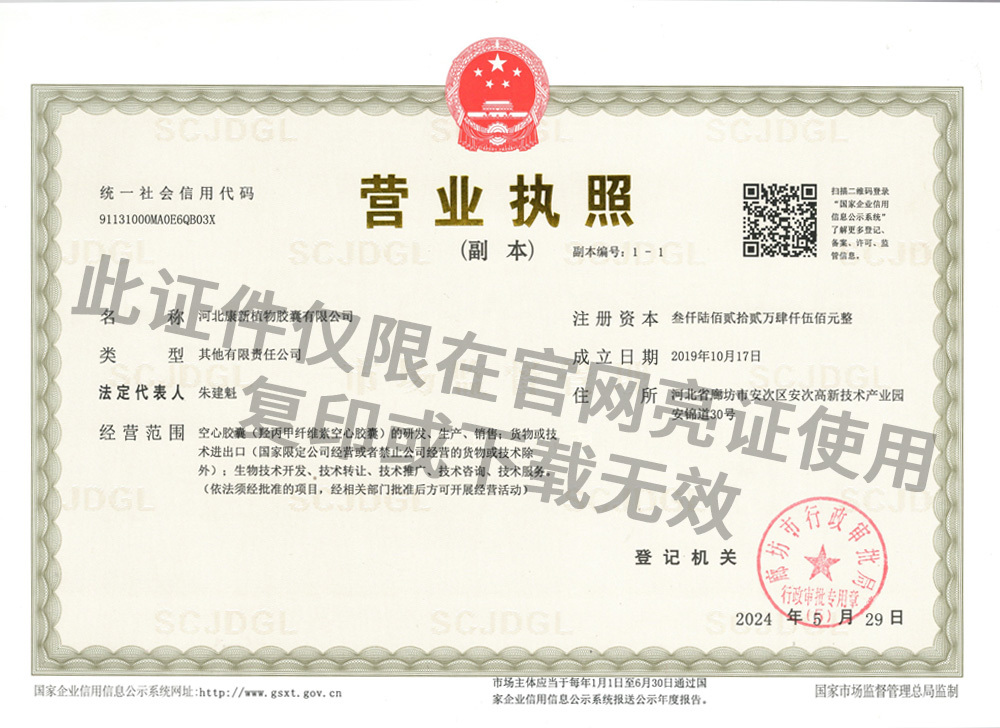
Hebei Kangxin Plant Capsule Co., Ltd. | Powered by www.300.cn | SEO | Business License | Privacy Policy