


10
2026
-
11
HPMC capsule cross-linking risks and how they degrade dissolution over shelf life
Article overview
Superior dissolution HPMC capsules are plant-based shells that disintegrate quickly and release fills consistently across pH and ionic conditions. Even the best shell can drift over shelf life. This guide explains how cross-linking and related shell changes slow release, how to test for them with USP-style methods, and how UK formulators and buyers can specify, stabilise and source hydroxypropyl methylcellulose capsules with confidence. It covers mechanisms, multi-pH and potassium chloride test designs, regulation, ICH stability planning, troubleshooting and procurement. Where we cite figures we name the source, and where evidence is thin we say so.
Table of contents
- 1. What cross-linking means for HPMC capsules
- 2. How shelf-life changes degrade HPMC capsule dissolution
- 3. Dissolution methods that expose cross-linking risk
- 4. UK and EU regulatory expectations
- 5. Designing an ICH stability programme
- 6. Troubleshooting and scale-up when dissolution drifts
- 7. Selecting and sourcing HPMC capsules in the UK
- 8. Frequently asked questions
What cross-linking means for HPMC capsules
In HPMC capsules, cross-linking is best read as any time-dependent strengthening of the shell that slows opening and release. True covalent bridging is far better documented in gelatin than in cellulose ethers. For hydroxypropyl methylcellulose capsules, the practical shelf-life risks are ion-driven gel strengthening, moisture-related embrittlement and fill–shell interactions.
Is HPMC cross-linked like gelatin?
Not in the classic sense. Gelatin is a protein, so aldehyde traces in a fill can react with its amino groups and build an insoluble pellicle. That is why USP <711> permits enzymes in the medium for gelatin products. The polymer in these shells, hpmc (hypromellose), is a cellulose ether with no protein amine groups, so that pathway does not exist. Does that make it immune to ageing? Hardly. Published evidence for covalent cross-linking of hypromellose under normal storage is limited, so we use "cross-linking" as a working label for structural change that lengthens capsule disintegration time. Enzyme tiers will not rescue a failing HPMC product, because the cause lies elsewhere.
Superior dissolution HPMC capsules refer to hydroxypropyl methylcellulose (E464) hard shells whose disintegration and release stay fast and insensitive to pH, ionic strength and storage age. They are vegetarian capsules and gelatin-free capsules by origin, yet the label "HPMC" alone guarantees nothing. The gelling system inside the shell decides how it behaves.
Which shell chemistries carry the most risk?
Three generations exist. First-generation shells use carrageenan with a potassium salt as gelling aid. Second-generation shells use gellan gum. Third-generation shells gel thermally without any gelling agent. Pullulan capsules, made from fermented starch, sit alongside as another plant-based alternative. Ion-sensitive gelling agents explain most reported dissolution problems, because potassium and calcium in a medium or a meal can tighten the gel network. Delayed release HPMC capsules are a separate category engineered to resist acid. Never benchmark them against fast disintegrating HPMC capsules, since the design intent is opposite.
How shelf-life changes degrade HPMC capsule dissolution
Dissolution degrades through three routes: water leaving the shell, reactive or hygroscopic ingredients acting on it, and cations tightening an ion-gelled network. Each can act alone. They often compound over months of storage.
Moisture loss and brittleness
Empty HPMC capsules typically equilibrate at roughly 4–6% water, against around 13–16% for gelatin. That small reservoir suits moisture-sensitive fills, yet it leaves little buffer. Store the shells in a dry warehouse, or pair them with a hygroscopic powder, and they lose water quickly, turning brittle and prone to microcracks. Cracking is not slow dissolution in the strict sense, but deformed shells and leaked fill distort the HPMC capsule dissolution rate you measure. Think of the shell as a sponge beside a thirsty ingredient: whichever has the stronger pull wins the water.
Reactive and hygroscopic fills
Tea polyphenols, tannin-rich plant extracts, aldehyde-bearing flavours and peroxide-containing excipients (such as aged polyethylene glycols or polysorbates) are the usual suspects. Hygroscopic extracts and maltodextrin blends also strip moisture. Industry experience links these fills to shell brittleness or slower opening at 40 °C/75% RH. The mechanism may be chemical, physical or both, and a short compatibility study will tell you which. Include a placebo-filled shell in the same pack as a control.
Are all HPMC capsules the same?
No, and this is the costliest misconception in the category. The gelling system, not the base polymer, drives the differences. In a Capsugel study summarised in industry literature, carrageenan-gelled HPMC capsules released under 50% of their content within 30 minutes in potassium chloride medium. Gelling-agent-free shells exceeded 90% in the same test. Table 1 sets that contrast beside other shell types.
| Shell type | Gelling aid | Release at 30 min (KCl medium) | Evidence note |
|---|---|---|---|
| Carrageenan-gelled HPMC | Carrageenan + potassium salt | Below 50% | Capsugel study (industry summary) |
| Gellan-gelled HPMC | Gellan gum | Not quantified here | Cation sensitivity possible; verify by test |
| Gelling-agent-free HPMC | None (thermal gelation) | Above 90% | Capsugel study (industry summary) |
| Pullulan | Not applicable | Not quantified here | Request supplier KCl data |
| Gelatin | Not applicable | Not applicable | Aldehyde cross-linking risk; enzyme tier applies |
Dissolution methods that expose cross-linking risk
Use USP <711> with paddles at 50 rpm and a sinker, 900 mL of medium at 37 °C, at pH 1.2, 4.5 and 6.8, then repeat in a potassium-substituted medium. The FDA's dissolution testing guidance explains the logic of multi-medium profiles and is a widely used reference for set-up.
Apparatus, speed and acceptance criteria
Apparatus 1 (baskets, 50–100 rpm) and Apparatus 2 (paddles, 50–75 rpm) are both accepted. Capsules float, so a sinker is standard with paddles. Table 2 lists starting settings; adjust them to your monograph.
| Parameter | Starting setting | Comment |
|---|---|---|
| Apparatus | 2 (paddle) with sinker | Baskets are an alternative |
| Speed | 50 rpm (75 rpm if coning) | Within USP ranges |
| Volume | 900 mL (500 mL for low dose) | Maintain sink conditions |
| Temperature | 37 ± 0.5 °C | Verify with calibrated probe |
| Sampling | 5, 10, 15, 20, 30, 45, 60 min | Early points show opening delay |
| Q value | Monograph-specific; 80% at 45 min is common | FDA treats 85% in 15 min as very rapid |
Multi-pH and KCl-for-NaCl media
Why swap salts? Sodium chloride is the usual ionic background, yet a gelled shell responds to potassium. Replacing NaCl with KCl at equal ionic strength is a deliberate stress test. A clean pass gives far more confidence than a pH 1.2 curve alone.
| Medium | Composition | pH | Time points (min) | Purpose |
|---|---|---|---|---|
| Simulated gastric | 0.1 N HCl (± NaCl) | 1.2 | 5, 10, 15, 30, 45 | Baseline |
| Acetate buffer | Acetate | 4.5 | 5–60 | Intermediate pH |
| Phosphate buffer | Phosphate + NaCl | 6.8 | 5–60 | Intestinal baseline |
| KCl-substituted | Phosphate, KCl replacing NaCl | 6.8 | 5–60 | Cation stress |
| Fed-state type | Bile salt and lecithin medium | 5.0 | 5–120 | Food effect |
Plot mean values with ranges on one chart per medium, and overlay time-zero and end-of-study curves so any widening tail is obvious at a glance.

Two-tier testing, IVIVC and food effects
Two-tier testing adds enzymes to rescue cross-linked gelatin. It offers no such remedy for HPMC, which is why the KCl check matters. On in-vitro–in-vivo correlation, be realistic. A Level A IVIVC usually needs formulations with distinct release rates, and for rapidly dissolving actives dissolution is seldom rate-limiting. The risk scenario is a poorly soluble active, where delayed shell opening can shift absorption, particularly alongside potassium-rich foods such as milk. Published comparisons of HPMC and gelatin capsules have often shown comparable exposure for many actives, but findings are compound-specific, so treat them as supportive rather than universal. Run a fed-state medium early, and consult a biopharmaceutics specialist before relying on any waiver.
Regulatory perspective (paraphrased from FDA dissolution guidance): dissolution testing is a quality tool for characterising product performance, supporting batch-to-batch consistency and signalling changes that may affect in-vivo behaviour.
UK and EU regulatory expectations
In Great Britain the shell polymer is E464 (hypromellose), listed as a Group I additive and generally positioned as an identity-preserved clean-label ingredient. For medicines, the Ph. Eur. hypromellose monograph and MHRA good manufacturing practice expectations apply. Confirm current rules with a regulatory professional, because additive lists and labelling guidance change.
E464, Ph. Eur. and MHRA touchpoints
Hydroxypropyl methylcellulose capsules in food supplements are declared as "hypromellose" or "E464" in the ingredients list. For medicinal products, the shell polymer should comply with the Ph. Eur. monograph (0348), and the finished capsules with the general capsule and dissolution requirements. Pharmaceutical grade HPMC capsules should arrive with a certificate of analysis, a specification and change-control commitments. Reference data on the polymer, useful for excipient dossiers, are gathered under hypromellose properties in PubChem.
Are HPMC capsules vegan and vegetarian?
Yes by raw material. The polymer derives from plant cellulose, so the shells work as vegetarian capsules and vegan capsule shells, and TSE/BSE concerns linked to animal tissue do not arise. Buyers still request a TSE/BSE statement, a vegan declaration and, where a brand wants a logo, third-party vegetarian or vegan certification. Never assume certificates exist; ask for copies. Plant-based capsules also suit consumers who avoid animal-derived ingredients for ethical or religious reasons.
What do 2026 clean-label trends mean for shell choice?
Industry commentary from ACG in 2026 points to gelling-agent-free shells moving towards clean-label claims and titanium-dioxide-free opacity. Some European producers have returned to gelling-agent shells for line efficiency and price. EU food use of titanium dioxide has ended since 2022, and the GB position has been under review, so check the current status. Functional categories, notably acid-resistant probiotic and delayed release HPMC capsules, are the fastest-growing segment. Persistence projects the global HPMC capsule market rising from USD 2.4 billion in 2026 to USD 3.9 billion by 2033.
Designing an ICH stability programme
A defensible programme follows ICH Q1A(R2): long-term, intermediate and accelerated storage, with multi-medium dissolution, moisture and water activity at every pull. Add a KCl-medium run at time zero and at the end. Nothing exotic, just discipline.
Step-by-step stability plan
- Fix the specification: dissolution Q value, capsule disintegration time limit and moisture windows for shell and fill.
- Prepare a placebo batch and an active batch in the same shell lot, and retain unfilled shells as controls.
- Pack in the intended primary pack (HDPE bottle with desiccant, or aluminium blister) and add an open-dish arm for worst-case exposure.
- Place samples at 25 °C/60% RH, 30 °C/65% RH and 40 °C/75% RH.
- Pull at 0, 3, 6, 9, 12, 18 and 24 months (long-term), 0, 6, 9 and 12 months (intermediate) and 0, 3 and 6 months (accelerated).
- Test dissolution in pH 1.2, 4.5, 6.8, KCl-substituted and fed media, plus disintegration, moisture, water activity and brittleness.
- Trend every result against time zero and set an alert level, for example a 10-point drop at any early time point.
| Condition | Minimum duration | Pull points (months) | Core tests |
|---|---|---|---|
| 25 °C/60% RH (long-term) | 12 months at submission | 0, 3, 6, 9, 12, 18, 24 | Multi-medium dissolution, disintegration, moisture, aw |
| 30 °C/65% RH (intermediate) | 12 months | 0, 6, 9, 12 | As above plus brittleness |
| 40 °C/75% RH (accelerated) | 6 months | 0, 3, 6 | As above plus KCl medium |
Water activity and moisture-sensitive fills
For probiotics and other moisture-sensitive actives, a water activity (aw) below 0.15 is a commonly cited internal target, though strain data should set your own limit. HPMC shells help because they hold less water than gelatin, but the fill–shell balance must be tested, not assumed. Measure aw of fill, shell and finished capsule separately. Induction-sealed HDPE bottles with a desiccant canister are a sensible starting pack.
How long do HPMC capsules last on the shelf?
Empty shells carry a supplier-stated shelf life, usually in years under controlled storage, so follow the certificate. Finished-product shelf life is yours to prove with data. Storage at 15–25 °C and 35–65% RH is a commonly recommended window for empty shells; confirm it with your supplier. Of course, some fills, such as antioxidant-protected oils, behave well beyond that window, so exceptions exist.
Troubleshooting and scale-up when dissolution drifts
Separate shell, fill and process effects first. Run shell-only controls, compare media, and map moisture by position in the pack. Most drifts resolve to one of these three.
Illustrative case: delayed opening at six months
Consider a botanical-extract product in size 00 HPMC capsules. At release, profiles in pH 1.2 and 6.8 pass. At six months and 30 °C/65% RH, the KCl-substituted medium shows a tail, and disintegration time extends well beyond the limit. (This is an illustrative scenario, not measured data.) A placebo shell stored alongside is unchanged, which implicates the fill, most likely its tannins and water-binding behaviour. Remedies include switching to a gelling-agent-free shell, lowering fill moisture, adding desiccant and repeating the compatibility study. The reverse also happens: when the placebo shell drifts too, the fix is a different shell chemistry.
Filling-line settings and humidity
Gelatin-optimised lines need adjusting. Typical starting points are a room at 20–24 °C and 40–55% RH, with reduced pin penetration and gentler vacuum for brittle lots; confirm with your supplier and machine maker. The manufacturer behind this guide states a machine pass rate above 99.9% on common filling machines. That is a company claim, so validate it on your own line.
| Symptom | Probable cause | Corrective action |
|---|---|---|
| Cracking at closing | Shell moisture too low | Raise room RH; equilibrate shells before use |
| Static, sticking | Very dry air, fine powder | Ionise air; adjust RH window |
| Slow opening in KCl medium | Ion-gelled shell, reactive fill | Switch shell type; screen compatibility |
| Lot-to-lot dissolution spread | Shell or lubricant variation | Tighten incoming specs; review magnesium stearate level |
| Loose or telescoped joins | Pin or vacuum settings | Recalibrate; verify capsule dimensions |
Controlling batch-to-batch variation
At scale, hold process parameters constant and bracket tolerances. Check shell moisture, dimensions, disintegration and KCl-medium dissolution on retained samples from every lot. Ask suppliers about dipping-pin temperature control and gel-time monitoring, which shape wall thickness and structure. Why do so many teams skip this? Because the first three lots usually pass.
Selecting and sourcing HPMC capsules in the UK
Shortlist by gelling system and evidence, then compare total cost rather than unit price. For HPMC capsules UK buyers should ask what each thousand finished, in-specification capsules costs. Market data support rising demand: MarketsandMarkets estimates the UK empty capsule market at about USD 176 million in 2025, rising to USD 234 million by 2030.
Comparison of capsule options
Table 6 summarises how generic shell types compare. Ratings are qualitative, so verify them against supplier data.
| Shell type | pH and ion robustness | Machine efficiency | Relative unit cost | Typical use |
|---|---|---|---|---|
| Gelatin | Good, but aldehyde cross-linking risk | High | Lowest | General fills |
| Carrageenan-gelled HPMC | KCl-sensitive | High | Mid | Vegetarian, non-ionic fills |
| Gellan-gelled HPMC | Verify cation response | High | Mid | Vegetarian general use |
| Gelling-agent-free HPMC | Insensitive in reported tests | Needs line adjustment | Higher | Potassium exposure, clean label |
| Pullulan | Request supplier data | Moderate | Higher | Oxygen-sensitive fills |
Total cost, lead time and size availability
Unit price tells half the story. HPMC shells usually cost more per capsule than gelatin, and lines may need adjustment. Fewer stability failures, lower reject rates and wider fill compatibility can offset that. Lead time depends on origin: for overseas shells, allow for sea-freight transit and customs paperwork, and hold safety stock. Sizes 00, 0, 1, 2, 3 and 4 cover most needs, and size 00 HPMC capsules (nominal volume about 0.91 mL) suit larger botanical doses. Request spare-lot availability in writing.
What should a vegetable capsules supplier UK buyers use provide?
Ask any vegetable capsules supplier UK teams shortlist for the following:
- Certificate of analysis and specification for each lot
- TSE/BSE, vegan and GMO statements
- Heavy-metal and microbial limit data
- Dissolution data in pH 1.2, 6.8 and KCl-substituted media
- Stability data for empty HPMC capsules and storage guidance
- Change-control and audit commitments
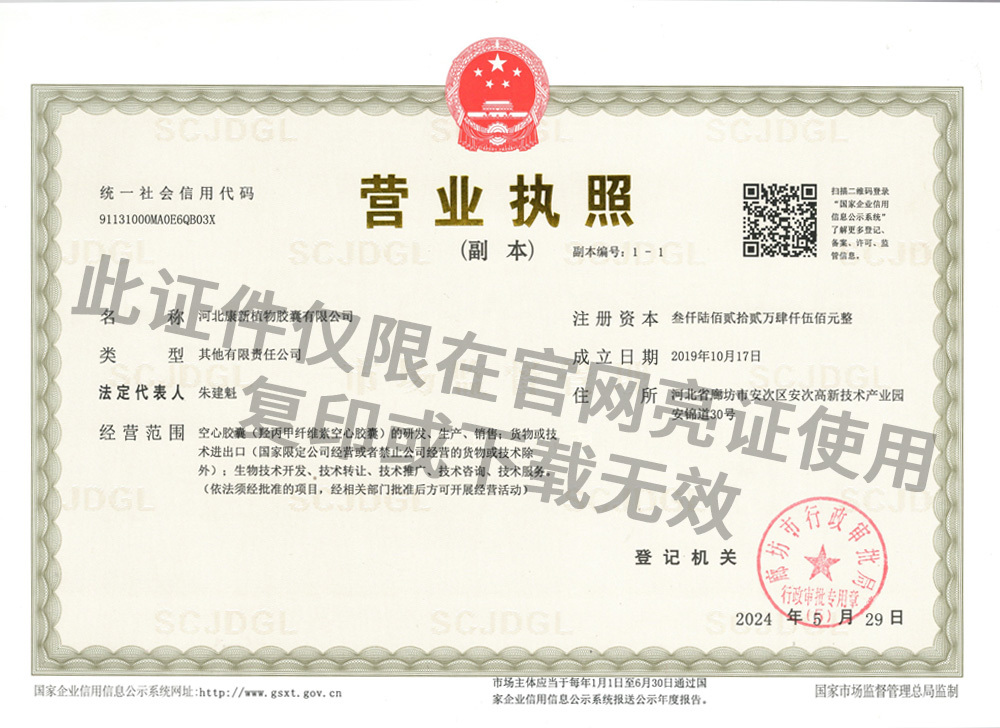
As one example, the producer behind this guide was founded in 2019 in Langfang, Hebei, and describes itself as a national high-tech enterprise with proprietary plant-capsule production equipment. It states an annual capacity of 10 billion capsules, and its R&D team has accumulated around 20 years of plant-technology experience. These are company statements; request certificates and audit access rather than assuming them.
Key takeaways for formulators and buyers
Cross-linking in HPMC shells is less a single reaction than a family of ageing effects: moisture shifts, fill interactions and cation-driven gel strengthening. Superior dissolution HPMC capsules are earned by matching gelling system, fill chemistry and storage to a multi-medium, KCl-stressed stability programme, not by the label on the carton. Test early, trend carefully and document supplier controls. This article is general technical information and not regulatory or medical advice, so consult qualified professionals before finalising specifications.
Frequently asked questions
Q: Do HPMC capsules dissolve slower than gelatin capsules?
A: Not necessarily. Many HPMC shells open quickly, but ion-gelled types can slow in potassium-rich media. Gelling-agent-free shells showed above 90% release at 30 minutes in KCl medium in a Capsugel study, so test your own fill.
Q: Does pH affect HPMC capsule dissolution?
A: Standard HPMC shells are largely pH-independent, and ionic composition matters more. Test at pH 1.2, 4.5 and 6.8, then add a potassium-substituted medium, since gelling aids respond to cations rather than acidity alone.
Q: Can HPMC capsules be used for delayed release?
A: Standard HPMC shells are immediate release. Delayed release HPMC capsules use specially engineered or coated shells designed to resist gastric acid, so specify that function explicitly and test with a two-stage acid-then-buffer method.
Q: How can I tell if a supplier offers superior dissolution HPMC capsules?
A: Ask for multi-pH and KCl-medium dissolution data, stability results, the gelling system used and lot-to-lot spread. Superior dissolution HPMC capsules should show fast, consistent release at time zero and after ageing.
Related News
Our plant hollow capsule product features
2024-06-19
2024-06-19
How to choose a plant hollow capsule
2024-06-19
Features of plant hollow capsules
2024-06-19
We warmly welcome customers from all over the world to negotiate business Communicate friendship and establish cooperative relations.


Address: No. 30, Anjin Road, Anci High-tech Industrial Park, Anci District, Langfang City, Hebei Province, China
Telephone:400-680-9976
Whatsapp:8615027424445
E-mail:grace@kxzwjn.com
Hebei Kangxin Plant Capsule Co., Ltd. | Powered by www.300.cn | SEO | Business License | Privacy Policy